
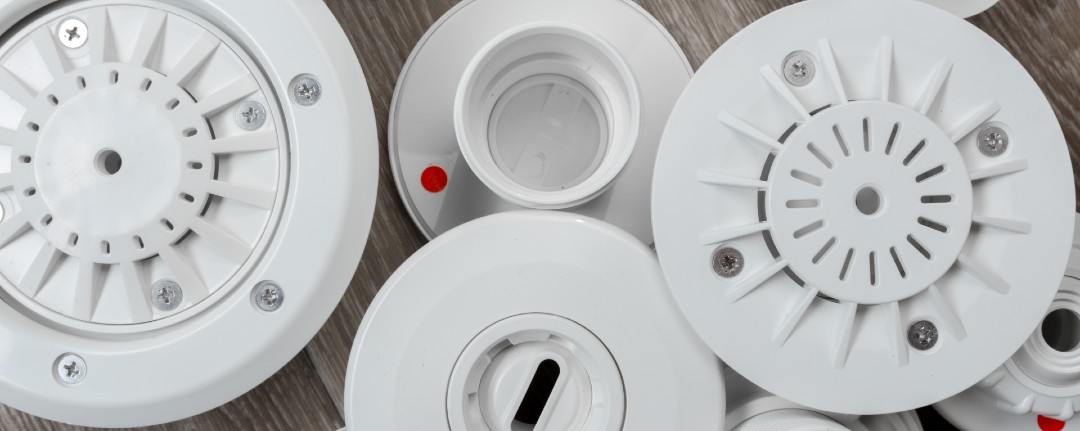
Fire safety is a critical aspect of any building, and selecting the right fire detection system can be the difference between a minor incident and a major disaster. Fire detector heads are an essential component of fire alarm systems, designed to detect smoke, heat, or flames and trigger an alarm to warn building occupants. Understanding the different types of fire detector heads can help businesses, schools, medical practices, warehouses, and other premises make informed decisions about their fire safety systems.
1. Optical (Photoelectric) Smoke Detectors
Best for: Detecting slow-burning, smouldering fires (e.g., upholstery, electrical fires)
Optical smoke detectors use a light beam inside the detector chamber. When smoke enters, it scatters the light, triggering the alarm. These detectors are highly effective in detecting smouldering fires, which produce more smoke before flames develop. They are widely used in offices, hotels, and residential buildings.
 Advantages:
- Quick to detect smoke from slow-burning fires
- Less prone to false alarms from cooking fumes compared to ionisation detectors
- Effective in bedrooms, offices, and escape routes
 Disadvantages:
- Can be affected by dust and dirt buildup, requiring regular maintenance
2. Ionisation Smoke Detectors
Best for: Detecting fast-flaming fires (e.g., paper, wood, flammable liquids)
Ionisation smoke detectors contain a small amount of radioactive material that ionises air between two electrically charged plates. When smoke enters, it disrupts the ion flow, triggering the alarm. These detectors respond quickly to fires that produce little visible smoke but generate flames rapidly.
Advantages:
- Quick to detect fast-flaming fires
- Suitable for areas with highly combustible materials
Disadvantages:
- Prone to false alarms from cooking fumes and steam
- Not as effective at detecting slow, smouldering fires
- Being phased out in some places due to the use of radioactive material
3. Heat Detectors
Best for: Detecting high temperatures (e.g., kitchens, boiler rooms)
Heat detectors come in two types:
- Fixed temperature heat detectors – trigger an alarm when the temperature exceeds a pre-set threshold (typically 54–65°C).
- Rate-of-rise heat detectors – detect a rapid increase in temperature rather than a set temperature level.
Advantages:
- Reliable in areas with high levels of smoke or dust, such as kitchens and industrial environments
- Not prone to false alarms from cooking fumes or steam
Disadvantages:
- Slower to detect fires compared to smoke detectors
- Not suitable for residential or office areas where early detection is critical
4. Multi-Sensor Detectors
Best for: A wide range of environments requiring comprehensive fire detection
Multi-sensor detectors combine two or more detection methods, such as optical smoke detection and heat detection, to improve accuracy and reduce false alarms. These detectors are increasingly used in modern fire alarm systems due to their adaptability.
Advantages:
- Reduced false alarms
- Suitable for most environments, including commercial, industrial, and residential properties
- Faster detection by combining multiple sensors
Disadvantages:
- More expensive than single-sensor detectors
5. Beam Detectors
Best for: Large open spaces (e.g., warehouses, halls, atriums)
Beam detectors use a projected beam of infrared light across a large space. If smoke disrupts the beam, the alarm is triggered. These are ideal for large buildings where installing multiple individual smoke detectors would be impractical.
Advantages:
- Covers a large area with fewer devices
- Ideal for high-ceiling environments
Disadvantages:
- Can be affected by dust, condensation, or misalignment
- Requires regular maintenance to ensure accuracy
6. Flame Detectors
Best for: High-risk environments (e.g., chemical plants, fuel storage facilities)
Flame detectors identify the presence of flames by detecting ultraviolet (UV) or infrared (IR) radiation emitted by fire. These are used in environments where fire risk is high, such as fuel storage facilities and industrial sites.
Advantages:
- Extremely fast response to flames
- Not affected by smoke or heat levels
Disadvantages:
- Expensive compared to other detectors
- Only detects fires when flames are already present
Choosing the Right Fire Detector for Your Business or Premises
Selecting the right fire detector depends on the type of environment and fire risks present. For example:
- Offices, schools, and homes benefit from optical smoke detectors due to their effectiveness in detecting smouldering fires.
- Kitchens and industrial areas require heat detectors to avoid false alarms from cooking fumes.
- Warehouses and large open spaces should use beam detectors for effective coverage.
- High-risk environments like fuel storage or chemical plants need flame detectors for rapid fire detection.
- A combination of detectors is often the best solution, especially in buildings with different types of fire risks.
At Coventry Fire Safety, we provide expert fire risk assessments to help businesses, schools, and commercial properties choose the most suitable fire detection system. Ensuring the right fire detectors are in place is crucial for compliance with UK fire safety regulations and, more importantly, for protecting lives and property.
 Need advice on fire safety or a fire risk assessment? Contact Coventry Fire Safety today!
Coventry Fire Safety is a trading name of JCH Safety Ltd